Wednesday, March 2, 2016

Democracy has left the building


Once upon a time, many countries decided to light up a new flame of their own and keep it burning bright. Every person in the country gave a bit of his light and soon, there was a huge flame that burned bright for its people. A flame that stood for energy, a flame that promised equality for all, freedom for all, security for all who lived in its light. The flame was called Democracy and it was well named because it was of the people, by the people, for the people.

The change happened very slowly and it happened in all the countries that had the flame of Democracy alight. The people who kept giving to keep the flame alight didn’t notice what was happening and as long as they felt the flame they had lit was burning, they felt secure and went about their daily business as usual.

Slowly, the shadow figures moved in, casting their long shadows of greed and hunger for power on the light that burned. The flame that had been lit by the people was slowly being controlled by a few who definitely did not have the people’s interests at heart. One day, all that was left of the flame were a few glowing embers and when it left the building, no one noticed and no one cared.

The armies grew and there were wars. For our safety, they said. To teach others about our wonderful flame, they proclaimed. And to make those wars possible, the people who had lit the flame were taxed. For your own good, they said. To keep the flame alive. All this is because we, the people want a better life for the world.

The powerful grew more powerful and richer. The poor grew poorer. The dreams that people started off with grew dim and died. There was no time for dreaming when every minute went towards existing.


Oh, my people, said the flame that was dying. Look up, listen, stand up and fight for your rights. Fight to fan the flame and make it burn bright once more. As long as there was a spark, there was hope. Maybe the few who questioned a bit too loudly were silenced but hope that its people would wake up was the only thing that kept the flame going.

Once in a while, people looked at the building and wondered if this indeed was why they had lit the flame. They didn’t realise that Democracy had left the building a long time ago. No, Democracy don’t live here anymore. Would it ever live here again?


de-moc-ra-cy: government by the people


Tuesday, March 1, 2016

Thirukural – Couplets To Live By That Transcend Time


Over two thousand years ago, a sage from South India wrote a collection of maxims - 133 chapters, each containing ten short, forceful couplets. He wrote in the South Indian Dravidian language of Tamil and his couplets cover a gamut of topics – from the divine to the role of a husband and wife, to gambling, liquor, medicine, politics and love. While little is known about his life, his work survives and is translated into many of the world’s languages. What is incredible is that most of it is so practical that it could well be relevant today as it was way back then.


 Translated, ‘thirukural’ means sacred couplets. Each couplet has fourteen syllables and each couplet contains a thought which is stated briefly and to the point, much like a proverb or a Confucian saying. It is probably one of the very few holy texts that has survived intact till now. Written on palm leaves with a pointed instrument, these aphorisms have survived time, language evolution, kingdoms, cultures and invasions. One of the reasons could be that the ancient Tamil language has not undergone too much of change unlike other languages in which religious texts were written and which have become extinct. Tamil is still very much a ‘living’ language. The other reason could be the fact that this work rises beyond religions – it is an ethical treatise which in a short, pithy form gives us guidelines so we can live our life in this world better. While the divine is revered and worshipped, it is not the life or lives to come that assume importance but the life we live now. What also makes it acceptable to many is that it does not preach. These aren’t laws and he does not set himself up to be a prophet – all he lays out are basic principles of ethics. While he talks about God, he does not give him a name – in fact, he refers to him as ‘pure knowledge’. He talks about love and charity but does not write down a set of rules. True, it was written as a guide for the times he lived in but because it is not specific in nature, it rises beyond to the universal, its relevance surviving the passage of time. What is touched upon are core values for the human race and discounting a few instances where the guidelines are for life as it was when he lived, for the most part, it contains a roadmap for the essential, basic and permanent aspects of human life.


Who was this man? There’s hardly anything that is known about him. This is the only work he seems to have written and though there have been researchers who feel other works of literature can be attributed to him, nothing can really be proved. So, apart from this ethical treatise, what we know of him are legends. Some say he was a simple weaver who wrote this thanks to divine inspiration. There was no other way a simple workman could have written something so profound over 2000 years ago without the benefit of the education that was reserved for the richer and nobler classes. Another story says that he was a Jain prophet who went South and lived among the people there. However, the Tamil he writes and the allusions he makes seem to indicate that he was a son of the soil. Yet another story says he was a king in Kanyakumari, the southernmost tip of India and that he renounced his kingdom, much like Buddha did, to devote his time to philosophical pursuits. (I’m prejudiced as I am from this part of India so the last story is the one I like to believe in.) On the 1st of January 2000, a 133 foot statue of Thirukural (133 feet to commemorate the 133 sections of his work) was unveiled on a small island off Kanyakumari – where the Indian Ocean meets the Arabian Sea and the Bay of Bengal.

In the southern state of Tamilnadu, his treatise is mandatory as part of the school syllabus. Many Tamilians, especially the educated ones, revere this creed because it rises above the narrow teachings of most religions. It is an ethical code to live by and it is relevant to everyone. It’s been translated to at least 30 languages around the world and today, it’s grown beyond being a gospel for just the Tamilians. It’s simple, it’s succinct, it doesn’t preach or pontificate, it’s practical, it’s relevant and it’s universal. It’s for every man to live a better life with his fellow men.


Saturday, January 2, 2016

HELP! Where Did My IP Address Go To?


I couldn’t find it. Everything around me looked so unfamiliar. I could have sworn when I turned the corner that this was the street where I lived. I have often walked down this street before and all that jazz. But I hadn’t. At least I don’t think so. The frontages of the homes looked different and the numbers on the mailboxes were unfamiliar. I ran back to the corner and on to the train station. Wasn’t this where I’d just got off? Even that had started to look different. So I sprinted at the speed of light – thank goodness this was the virtual world – and went to the next corner to see if my favourite coffee shop was still there. It had been this morning….but wait, it had changed too, Subtly, but it wasn’t the same and the number on the entrance was different. Was this some ghastly dream?

This couldn’t be happening, I thought. I wandered to the park and sat down on a bench. The light in the park seemed different, as though it were the same park but lit by another moon. Then it hit me. Was it possible that I was caught in some dreadful time warp? Had I gone into a kind of Rip Van Winkle sleep in cyberspace only to find that I came back to a different dimension? Where was my familiar address string that I was so used to?

I took a hold on myself. ‘Don’t panic!’ I told myself and retraced my footsteps to the house where I knew I’d lived. I ignored the longer-stringed digital address that glowed on my mailbox and walked in. I knew I had mail – I’d seen the red light flashing on the box. I walked into a home that was mine and yet different. It was sleeker and it looked like everything was going to work a lot faster than before. I gestured at the large all-in-one screen and it came to life with a different light.

‘Welcome to the world of IPv6’

So had I slept while they made that leap from IPv4 to IPv6? I must have!


Soon, very soon, Internet addresses as we know them will have had their day. And we have to embrace a new world and a new address virtually.


Wednesday, December 2, 2015

Requiem For The Apostrophe


Is the apostrophe on its way to annihilation? Will punctuation soon enter the annals of history? Is a new era of transitional grammar dawning?

Well, it looks like that’s the way the winds of change are blowing. For many, any kind of protest is just a lot of sound and fury signifying nothing. After all, what does it really matter whether something is spelt Kings or King’s? Dispense with that little tadpole like thingie once and for all and you don’t really have to worry your head about where it goes anymore. Ah, blessed relief!


For others, it’s the death knell of language as they know it. The beginning of the end, as it were. First the apostrophe, then, who knows? It could well be every punctuation mark we know. ‘Out, damn’d spot!’ would probably be the last of it as the world entered a brave new world unhampered by any kind of punctuation. For the purist, there could be no fate worse than this, never mind that some might just see it as a natural progression or evolution of language.

Well evolution is, as we speak, taking place on the streets of Birmingham and place names and road signs are going to bid a quick goodbye to the apostrophe. The Birmingham City Council feels it will be much better from the point of view of emergency services. The banishing of the apostrophe will make it easier for them to find places and not get lost. One infers from this that the apostrophe led the emergency services a merry dance through the streets of Birmingham like some Will o’ the Wisp, spreading confusion instead of clarity. If America and Australia do not put the apostrophe on place names to avoid confusion, can Birmingham be far behind?

Strangely, there are a number of professors and such erudite ilk who really don’t see anything earth shattering about this move. After all, how many really do get their apostrophes right? They should know – they correct heaps of student papers. Looked at from that angle, maybe they have a point. However, there are many others who are making a strong protest against this move, asking the Council how they can teach their students what is right and what isn’t when the city signboards are wrong? The Apostrophe Protection Society (oh, yes, there really is one!) is up in arms against what it sees as a very bad example to students.

Well, the ones who do not subscribe to this don’t see this move as either wrong or right, just expedient. Does it really matter what someone like Lynne Truss has to say – well, anyway, who is this Lynne Truss? Didn’t she write something about pandas? Expediency is the need of the hour and if one has to axe the unnecessary, the superfluous, the hangers-on, so be it. Let’s guillotine the apostrophe and get back to business as usual.

And leave it for some band to compose a song about ‘The Day The Apostrophe Died’.


Monday, September 21, 2015

The Sins Of Our Fathers


Am I my brother’s keeper? I’m not. If I don’t even have to be my brother’s keeper, why should I have to live in a constant state of guilt for my forefathers’ sins? Biblically, the sins of the fathers are supposed to pass down to the third and fourth generation. Look around the world today and you’ll find that the shadow cast by past sins or perceived sins is much, much longer than that.

In almost every country, there are people who bear a historical grouse – about oppression, suppression, cruelty against their forefathers. Through generations, this ferments inside till suddenly there’s a venting and all hell breaks loose. Just one little seemingly innocuous incident is enough to be the flashpoint for a blaze of emotions that can very well end in carnage.

The trouble is, there seem to be no answers in sight and maybe the time has come for both sides to sit down and let it go. It’s hard to let go of a cross your forbears bore which has been handed down with the unspoken urge to carry it on. It’s hard to let go of anger that very often you were born with. It’s hard to root out a crutch that makes you feel that all your present problems are due to something that happened generations, maybe even centuries ago.

I read a hub the other day and it touched me because it reflected the angst and pain of a group pf people. We have a similar situation in our country – only it isn’t colour but caste that is the issue. I asked myself if I really wanted to apologize for what my ancestors did and the answer is NO. Or rather, the answer would be No if I were expected to. I might do it if I were moved to but I know that the compassion that maybe I should feel would vanish in a trice if I were MADE to apologise.

Because I wasn’t there. And the person who feels the pain passed down wasn’t there either.

So what is the solution? If there is a solution. Will this impasse just get worse? It will when there are tremors in other areas. The prospect of depression, the prospect of jobs being lost, the prospect of prices rising. In times of trouble, it isn’t Mother Mary who comes to you but the spectres of times gone by, raising their ugly heads. It rarely happens in times of plenty. It almost never happens when a country is threatened from outside – an outside enemy usually makes everyone come together. It happens, like I said, in troubled times within.

The solution as I see it has to be at the grassroots or the community level. If one were to look at our politicians to fulfil this role, you couldn’t be farther from a viable solution. Politicians tend to divide and rule – that’s the way they stay in power. The only way to get people to sit together is to educate and to spread awareness. Here’s where local leaders will have to rise up for the common good.

The ideal way to get there would be a 3-point programme.

- Acknowledge
- Accept
- Address

One has to acknowledge that there were inequalities and acts of oppression and cruelty. One has to then see how that has affected the present. Once you accept it as being the cause of certain effects that are detrimental to the functioning of society and maybe even a country, it is easier to see things objectively. The next step is how to address these ills practically, logically, rationally and unemotionally.

When you don’t HAVE to feel sorry, you’ll find the barriers breaking down and the possibility of bridges being built. You’ll find the walls of political correctness crumbling and a sense of humour coming to the fore. In the old days – well actually not so long ago – comedy meant catharsis. We saw ourselves on stage or onscreen and we laughed. Today, we see any kind of humour against ourselves as personal and we’re quick to take offence. All it does is make the chasms between groups even wider. Laughing at ourselves and at others is the only way to bridge the gap. If only we learned to laugh at ourselves, we will stop feeling so sat upon and spat upon.

It has to be a concerted affair – everywhere, at all levels. The American forthcoming elections have highlighted the latent racial tensions but it’s there alright - the danger beneath. As it is all over the world in different forms. South Africa, India, the UK, Sri Lanka. It’s the same story whether it’s played out by the factions of different creeds, races, colour, caste or class. In most cases, the flames of hatred are kept alive to keep certain people in power. We need to get over this without any political interference. In the age of the Internet when a whole mass of humanity has been powered with connectivity at the click of a mouse and there’s a wave of globalisation sweeping over the world, it’s time we shook off the politics of prejudice, the acid of internalized hatred, the shackles of the past and the fear of the different. It’s a long haul but we can do it if we try and who knows - Lennon’s legendary song might well come to pass. Imagine all the people sharing all the world……..


Thursday, July 2, 2015

Medicine, Men Of The Cloth And Mammon


Money was, perhaps, never meant to be a part of religion or of medicine. There was a time when physicians did not have a rate card and men of God lived on charity. Then the greenback serpent entered the idealistic worlds of both and offered them visions of great wealth and power. It was too much to expect them not to succumb. The few who didn’t were left behind and not counted.

Healing – the Body and the Soul

Both professions are supposed to be about healing – while one looks after physical wellness, the other looks after spiritual well being. Time was when these were ‘noble’ professions – when sons were offered to enter the priesthood or were given to study under physicians in order to learn and grow into these professions. Healing was god-like and that meant that you could not be earthly when it came to being compensated. So it was left to the one who was administered to – body or soul – to give what he deemed best.

When it came to religion, most priests lived by taking a portion of what was offered to the gods. This was their payment for selflessly serving the divine. They were to take only what they needed – not what they wanted – and then leave the rest to be distributed to charity. Physicians were the same. They treated the sick and the suffering and for their care and concern, they were given cash or kind – it wasn’t right for them to ask for anything.

Take the old Levite tradition for example – this tribe was the one from where the Jewish priestly class emerged – they were not given any land in the promised land. Instead all the other eleven tribes had to give them one tenth of what they got. In this way, they were allowed to do God’s work and were supported by the rest of the community.

This is very similar to the Brahmin tradition in India where the priestly class was entrusted with educating the people and running the temples. As they indulged more and more in literary pursuits, they were soon asked to advise the kings about military and other strategies – which they did very well. Very soon, power and money beckoned and the simple life was left behind.

Later, came the Christian priests and the nuns who didn’t or rather, weren’t supposed to call anything on this earth their own. They were here to serve the Lord and humanity at large. From living lives with just the bare necessities however, many of them grew to embrace a life of comfort and even luxury, wielding great power over the people who they were supposed to look after.

Take the case of the physicians or of the healers of the bodies all over the world. There was a time when it meant a life of hard work and a tremendous amount of sacrifice. It was their commitment to the well being of mankind that made them take up that particular profession. Man or beast – physicians were those selfless beings who were at everyone’s beck and call, always smiling, soothing away aches and pains and fevers and helping you get back into the wellness zone.

If we go back further in time, the witch doctors or the Druids were very much the same – their job was to cure or try their best to cure whichever patient came to them – king or pauper. More often than not, they are portrayed as living in little huts away from the main populace of a village and practicing their medicine with herbs, roots and rituals, the knowledge of which was passed down by word of mouth from generation to generation.

Enter Money

Once their eyes started lighting up at the sight of money, it was the beginning of the end. Suddenly, money was the ultimate goal, not the wellbeing of people. Once the focus shifted from the ones they had vowed to look after to themselves, the picture changed and it was the power of money that became important – not the power that their profession gave them over illness or ignorance. A J Cronin’s The Citadel is a perfect example of how money can insidiously compromise a physician’s ethics.

Is there merit in religion and medicine going back to the days of dedication and working for whatever was given? Can we really take the money factor out of what has grown to become among the most paying professions? If only we could take the money out and put the ethics back in, maybe a lot of ills in this world would get ironed out – but then again, maybe that is being too simplistic and hoping for too much. What is relevant however, is that Mammon should not have pride of place in medicine or religion.


Monday, August 4, 2014

A Few Good Spanks…


…never hurt anyone, least of all a child. And I do believe that it is infinitely better than long lectures laced with sarcasm, threats or just plain tortuous length. Now this kind of a viewpoint could be highly unpopular in an age when children’s rights have become such a matter of concern and even one harsh word could be constituted as abuse. Well, if we want to raise a generation of namby-pamby, extremely sensitive, self-centred, thoroughly obnoxious kids, that’s fine. Otherwise maybe it’s time for parents to put their foot down and fight back like they did in New Zealand recently. Fight, not for themselves and their parental rights but for their children’s sake. Maybe we need to get back to the age of spanking – here are a few guidelines that come to mind.


Kids are like pups
They understand cause-effect. They do something they shouldn’t, they get a spank, they learn to try and not do it again. Otherwise they keep getting spanked like they learn. Very much like a rolled up newspaper and a pup. Repetition brings results in both cases. Children are simple and understand simplicity when it comes to correction – so let’s not complicate matters and confuse them.

Before the anger
Spank before you get angry when you spank to correct, not as a release for your frustration. At this point, once is usually enough. Once the tipping point is reached, you are not very often logical to know when to stop – so spank way before you get there. Never, ever slap, pummel, push, pull, shove, yell or abuse. Never. And there is no excuse for any leniency where that rule is concerned.

The bottoms are best
Soft enough to feel the pain so a lesson is learned but there’s no harm caused. Remember that young children have soft bones and you could easily cause damage if you hit them any and everywhere. Never, ever pull his pants down and spank him – you can correct a child without violating his dignity.

Keep in mind that spanking is done with an open hand, never a closed fist so it smarts but does not cause damage or break the skin.

Don’t expect instant change
Many children need to be corrected many times before they change. (The pup and the newspaper, remember?) How can you expect a little child to learn instantly? Try and spank the same way every time so he knows you are in control and you mean business. Don’t let the bully in you come out where you take the day’s frustrations out on your little baby. Some children learn very quickly, some take time – this could be genetic, maybe. So if you were a slow learner when it came to correction……

Don’t torture with talk
Lecturing them is like Chinese torture. You start and you’ll be doing it the rest of your life till they’re sick and tired of you. Act, don’t talk should be every parent’s guideline. Look at it this way – if men or women did it to their spouses, they would be branded ‘nags’ or worse, mental abusers. If you need to teach children about right or wrong, good or bad, keep it short. Remember, they learn by example much more than anything else. Of course you can talk to them at length – about the wonders of the universe, the beauty of the world around, about the incredible things to be found in books, about how much you love them. Lectures stunt a child’s mind – inspire them so they are always learning with minds that are ever expanding.


They’re children, not adults
Don’t talk to them like adults, don’t treat them as adults. Children feel secure within the confines of discipline. Set the limits and correct them when they cross it. As they grow, you might want to re-look at those boundaries and limits but when you do, make sure to let them know. In short, don’t deprive them of their childhood and make them grow up too fast. And please don’t ask them to understand you or your problems or your frustrations or what you’re going through. If you need to go to a shrink, do so – don’t burden your child with anything but child-friendly things.

Spanking ’n loving
They go hand in hand – you can’t really love a child and not correct him. You can’t spank a child when there isn’t a lot of hugging, loving and caring otherwise. When you’ve got both in perfect balance – a little bit of spanking and a lot of loving - that’s perfect parenting!


Do you think it’s all right to spank a child to correct him?
Do you think it’s wrong to spank a child?

Norman Rockwell (1894 – 1978) did 322 illustrations for The Saturday Evening Post magazine covers over forty years. This one of a mother spanking her child appeared on the November 25th edition cover way back in 1933. One wonders what the mother is reading and what she’s thinking about? To spank or not to spank? Does the book say anything about it?


Sunday, November 10, 2013

Give Us This Day...


Our daily bread comes to our doorstep in the morning. On a bicycle. The man who brings it is just one of the many vendors sent out by the many small old world bakeries that dot the city we live it. They’ve held on in the face of competition from the big guys and the array of different breads in the supermarkets. We don’t buy from him every day because I get enough for a few days and freeze but I do know people who wait for him every morning so they can have that hot, crusty bread for breakfast.

Maybe the loaves don’t look as symmetrical or as perfect as the ones in the stores but the freshly baked smell is to die for. Even when it comes out of the freezer, all you need to do is thaw it for a bit, slice and toast – and you’re in bread heaven! There’s a choice – small loaves that are soft and melt-in-the-mouth, crusty loves that are soft on the inside, puff pastry squares that are delicious with tea, flat breads that have such a wonderful flavour, buns with sesame seeds scattered on top and they taste divine with a dab of butter.

The thing is, how long will our bread man survive? Will the younger generation continue to buy from him? Or will he fade into a ‘the way things were’ memory? Will high-rise gated societies and huge supermarkets take away his livelihood? Whose responsibility is it to see that not only does he survive but keeps doing better? It just has to be our responsibility. I’ve realised that electing leaders and expecting them to do anything for anyone just doesn’t work anymore. Politicians are a number-crunching breed apart whose only worry is where the votes come from and how to get them. Not for them the headache of seeing that our taxes go to help the unfortunate ones amongst us. So that leaves us. And if we pull together, we can be a force to reckon with.

Why promote the small businesses around you? Because in the long run, it means you are shaping your surroundings to become better. By supporting people like the bread man and helping him earn his livelihood, it means his family eats better, his children get educated and they have enough to stay healthy and happy. Without that, what does a man do to feed his hungry family? Can you blame a man turning to crime?

When the oft-used phrase Think Global, Act Local was used in a business context, it meant that multinational giants were putting down roots at the local level to improve their bottom line. What we need is an upturning of that system. What we need are local roots that need to be nourished so we need to think local first. We need to become more aware, we need to spread the word and if need be, we need to make it fashionable to buy local produce and to encourage the small people in business around us. If we need things around us to change, we cannot wait for a faceless government to do it for us. We need to do it ourselves. So it empowers us as much as it does the ones at the grassroots levels around us. When we empower the microcosm, the macrocosm will automatically get better. Our positive actions with a local focus will only help us act better in a global sense.
For me, I’d be happy to continue seeing that smile on the face of my bread man and the many like him.


Thursday, August 29, 2013

Why the majority MUST matter


For too long, democratic governments all over the world have followed a policy of minority appeasement and one wonders when a volcanic upsurge of reactions will happen. For too long, minorities have been seen as vote banks that can swing the results in favour of a particular party or candidate. For too long, the vast majority in most so-called democracies have remained a silent mass, mere mute spectators.

How long will this go on, is the question. Like an ocean that is usually calm, all it could take is one little shift way below the surface to cause a tsunami. And not taking into account the majority viewpoint is a tsunami waiting to happen. The burning question is, why do politicians do what they do and ignore the many to pamper the few?  The answer probably is that their priorities are short term. After all, winning an election is much more important than long term plans for the general good. If winning means divisive politics, so be it. Any problem that arises after that can be dealt with on a need-to basis. Or so they firmly believe. Sufficient unto the day is the success thereof.

The majority versus the minority can exist simultaneously on various levels in most countries. It could be a division along lines of religion, colour, class or castes, race or even age or gender. When it comes to the majority having to matter, the argument would be, wouldn’t that make it a totalitarian state? The thing is, in a totalitarian state, it doesn’t really matter. There are certain rules set and they must be followed, whether the original community is the majority or not. However, in a democracy, that isn’t the case. Elected representatives come into power because of the majority vote and they stay in power too often because of divisive policies that involve the minorities.

Religion is perhaps one of the greatest dividing factors. When minorities are indulged and the majority is made to feel their religious sentiments have been disregarded, there’s a simmering underbelly of tension that grows unseen. And then, one day, a little spark sets off a flagrant fire. Too often, self-styled leaders of the minority take advantage of politicians’ largesse and try and squeeze as many favours out of them. In the long run, this can only be to the detriment of the large number of the minority community which doesn’t really want to get into a conflict with anyone, least of all those who form the majority. It gets worse when the simmering resentment becomes apparent in slights, in nuances of speech, in a word or a look. This has the effect of the minorities bunching together for safety and the lines are drawn more sharply.

Why does it make sense to ensure that the majority’s rights are protected? Because then a government could be in for the long run. Too often, governments in power in democratic countries are voted out rather than voted in. If a party wants to be in there for the long haul, it might want to think about majority politics. When you keep the majority happy, you’ll find a more benevolent attitude towards the minorities and that augurs well for peace and prosperity.

When you break it down, it’s all about human nature. Let the larger group feel that they are being looked after and they will in turn be more tolerant of the smaller group. When the smaller group flexes its muscles, you can be sure there will be retaliation some day. Now a flexing of the muscles need not be a mere show of strength. It could be manifested in so many ways. By asking for special exemptions, for reservations, for tax deductions.

In most democracies, there has tended to be a kind of apathy when it comes to the majority and maybe this is why governments have gotten away with what they have. Flashing smiles, false promises and a great big ‘Pretty Please’ usually work with the ones who bestir themselves to go and cast their vote. It’s only when the majority wakes up and realises that while it is paying to keep the wheels of the country turning, it is being taken for granted and very often ignored, that the first rumblings begin. Astute politicians will hear and take note – unfortunately, most are too busy enjoying their new-found power to bother. All it takes is time for the rumblings to grow to a full-fledged revolution. Then, a ‘let them eat cake’ attitude will only fan the flames.

It’s time to think about what democracy is all about. It is of the people, for the people, by the people – the people who are in the majority. It’s time to realise they matter. They must matter before it’s too late.

Saturday, August 10, 2013

Education vs. Learning


When so many of us agree that education is the key to freeing the mind, to solving most of the world’s problems, to making people from all corners of the globe come together, we also mean education in the traditional, conventional sense, maybe because we’ve never thought of anything different. Education for us means a teacher, a school, a set syllabus. perhaps time frames within which certain bits of knowledge or information need to be imbibed, digested and then displayed so we can be tested on our understanding. Maybe it’s time to change our way of thinking. In a world that is changing so fast, should our old ideas about education be the only way there is? Yes, there have been changes through the years in the way education has been structured and perceived but it was all done within a certain framework. Is it time to think out of the box? Sugata Mitra seems to think so and to prove his point, he’s been experimenting with new ideas over the last eleven years all over the world.

What seems to be emerging is that children have an innate sense of learning and that need not be within the narrow functions of education. Maybe what we need to do now is to give them the tools and the opportunities and set their minds free to learn what can be learned in the way that they want to learn it. It means leaving them to go out into the unknown and helping them explore and go forward to conquer new ideas and frontiers and even forge new paths to get to their goals. Pretty much like a guided tour as against a voyage of discovery. Maybe one would learn a lot more facts the first way but a lot more experience in the other.

Experiments like these amaze us who have been educated in the conventional way because it defies all logic – or rather, logic as we know it. If we need to facilitate a brave new world for our children, maybe it is time we took a step back after providing them with the opportunities. With technology racing ahead, it’s their world – a world they understand and grasp much better and much faster than we do. Maybe it’s time they started learning instead of being educated. Maybe it’s time we stopped putting boundaries to their boundless imagination and capabilities. Maybe it’s time we guided from behind rather than lead from the front. Maybe it’s time we cut them loose to discover rather than fence them in. Maybe it’s time.

Friday, December 28, 2012

Rememberer Resolutions


The old song went, “All I want for Christmas is my two front teeth’. All I was a-wanting was my rememberer back because without it, I can’t for the life of me even think of keeping any of those resolutions I made a few days ago. Oh yes, I made a list and checked it not twice but a hundred times, just to make sure I hadn’t repeated myself too often…. happens a lot these days!

A friend in the same boat, I might add, sent me something I thought summed it up so well. Our forgetters seem to be pushing our rememberers into the shade and nothing short of a miracle is going to reverse that tide. So is there any point making resolutions that I won’t even remember I’ve made at all?

Considering that I’m at the threshold of the dawning of the Age of Fogettererism, might it not be more prudent, not to say infinitely more practical, to leave my rememberer behind and enter with gusto into the new age? No vestiges of ‘what might have been’ to cast a shadow of regret on the road ahead. Just a joyful embracing of what is to come.

So I think I’m going to change a few resolutions around. Better still, cast out that list (Get thee behind me, I have no recollection of what thou containeth!), and begin with a tabula rasa. A clean slate that says it’s okay to forget. Onward forgetterers, may our tribe increase. Who cares what the morrow might bring? Que sera, sera!


Wednesday, October 10, 2012

In Our Little Garden


It’s just a little patch but we love it. It’s green, everything’s organically grown and we do get quite a bit from there to put on our table. Summer in Pune, the city we live in – three hours away from Bombay, India’s commercial capital – is dry and scorching. So it’s only the larger trees that survive – everything else becomes brown and dry. Fortunately, that lasts for just two months of the year. Then comes the rain in June, armed with a palette of the most incredible shades of green. Almost overnight, there’s a miraculous change and we wake up to a garden that has been painted with hues no human can match! The very air changes – filled with moisture, Nature’s great refresher….. and it’s time to plant and to reap.


We have a bit of this and a bit of that. My husband, who hates the ‘manicured’ look when it comes to gardens, loves it when everything springs up lush and full of life. We have a gardener who thinks the same – I swear I’ve heard him singing to the plants! So let me take you on a tour, to be followed in a few days with some of my favourite recipes using what we get from our little garden.

Going Bananas
A banana plant bears fruit only once. Once the bunch of bananas is cut, you need to cut down the tree. The great thing is, there are always three or four young trees that grow around the root so the garden always has a surfeit of banana plants. They need a lot of water. Everything can be used – from the leaves which people used to eat on – now used only in traditional wedding feasts, the flower which you find at the end of the bunch, the bananas themselves, both raw and ripe and the centre of the stem. 


Overflowing with Passion
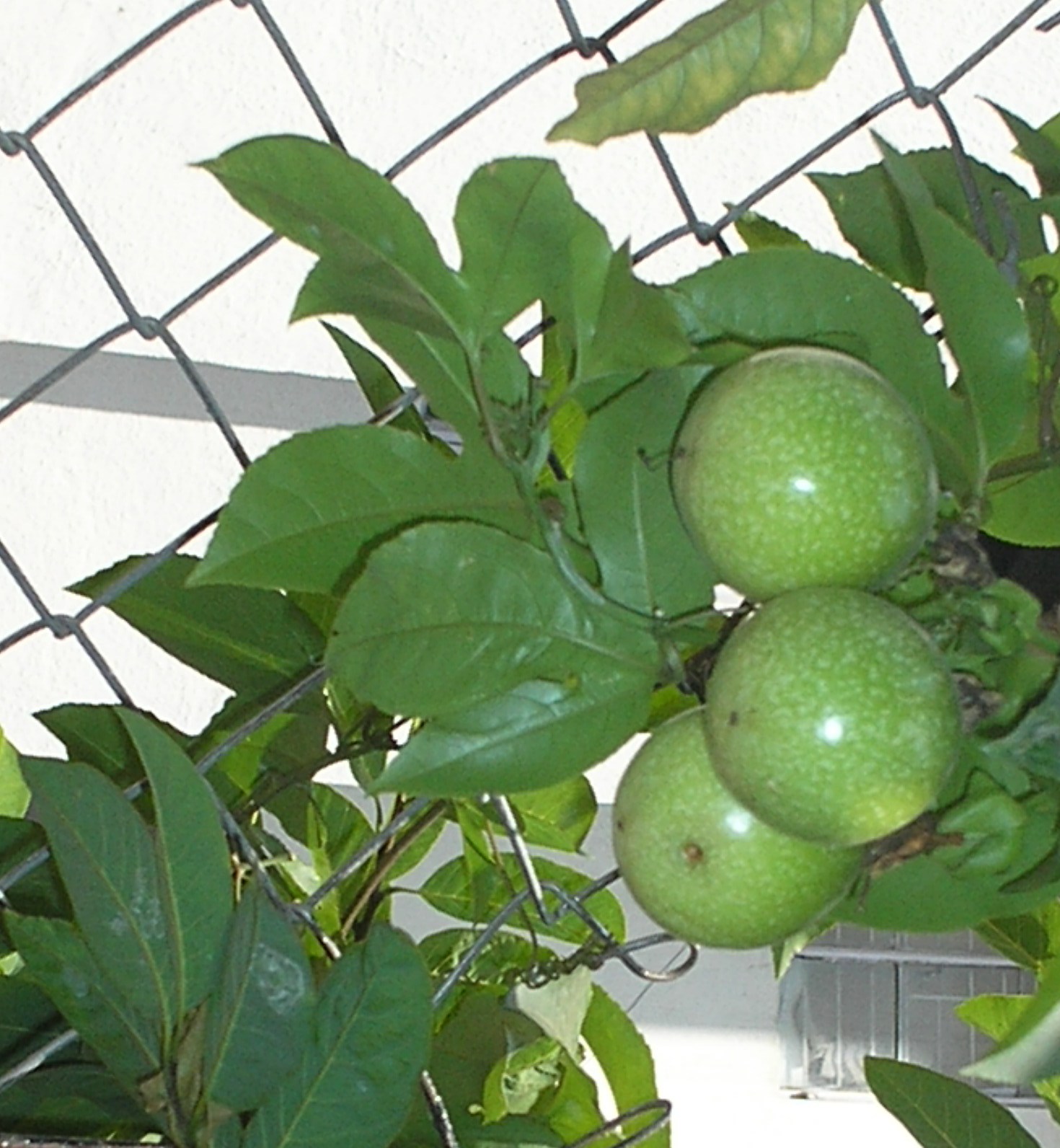
Passion fruits hang in bunches like orbs – green at first, then a wonderful yellow. The flowers are lovely and the pulp inside is a bright yellow-orange. The plant is a creeper and you get quite a lot of fruits from one plant with a sweet-tart taste. It hardly needs any looking after – just a fence or tree to grow on. There’s a lot you can do with passion fruits. 


Custard Apple Treat
The fruits from our garden may be smaller than the ones we get at the stores but they are also sweeter. Not everyone likes to eat this fruit because it means ploughing through so many seeds. If you have the patience, you’ll find that it really is a delicacy. They’re best eaten when they are slightly soft to the touch. They’re great in desserts too. 


Pink with Pomegranate
This tree needs a lot of sun and you get plenty of fruit from a fairly small-sized tree. Our fruits don’t have the smooth look you see in the shop stores but they taste wonderful and can be used in so many ways.


Papaya – packed with nutrition
The fruits have just begun to appear and we’re hoping we get a good crop this year. Both the raw and the ripe papayas are used – one in curries, the other usually as a breakfast fruit. It is said to be a great digestive.


Delicious Chikoos

They’re known as sapotas in most other countries but here in India we call them chikkoos. They can be eaten as fruit or pureed and used to make fruit shakes and desserts. You should wait till they are fully ripe when they are sweet and delicious. 


The flavour of Bayleaf
Some use them fresh, most dry them a bit and use them as a flavouring. All one needs to do is to cut a small branch, leave it in the sun for two days, take out the leaves and store them. The Indian bayleaf is used extensively in curry powders and in biryanis.


Green Living

I don’t know what these spinach-like greens are called – all I know is that they are great in soups, as a vegetable dish and in salads. The leaves are slightly fleshly, the flowers are a lovely delicate lilac.

The other greens that we love are the leaves of a creeper called Ceylon spinach. We use a lot of the leaves in cooking. They’re great as a snack too – dipped in batter and deep-fried.


Drumming with Drumsticks
The drumstick or Moringa tree supplies us with so much more than something to put on the table. While drumsticks (they really do look like drumsticks!) make a great vegetable, the leaves are used to make a vegetable dish. More than that, the leaves are very useful to get rid of a fever especially in a flu attack. A decoction of the leaves is used as a preventive as well as to treat flu. Almost every part of the tree is used by traditional medicine practitioners. 


Seasoning with Curryleaves  
It’s what we use to temper our curries. A few leaves and a few mustard seeds. It has medicinal properties and is said to stave off infection.


The awesome Neem
We let the leaves that fall be – they’re the best pesticide ever. Skin irritation? Wash with an infusion of neem leaves. Dogs with bad breath? Give them a twig of neem to chew on – it also prevents worms. Put a few leaves in the rice or lentils you store and in cupboards to keep bugs away.


Seasonal stuff
We grow a bit of this and a bit of that as well – some of them seasonal. Okra or lady’s fingers, eggplant or brinjal, tomatoes, lemongrass, fenugreek, turmeric, ginger, bitter gourd, lemons, coriander, beans.


It’s great to be able to get so much from this little patch of ours. With the homes around us coming down and huge apartment blocks being built in their place, will our little corner last? One can’t tell. To live hemmed in by ten and twelve storey apartment high rises is not very appealing. Till that happens, though, we’ll just go on enjoying all the goodies from our garden. 


Thursday, February 2, 2012

In the year 3012


Jabber watched the sun bidding the world goodnight from his penthouse apartment. First the change in the intensity of the light, then the change in colour as the brilliant ball of energy put on its evening veil and became a red-gold orb you could feast your eyes on. It rested on the horizon for a moment and it was as though its many invisible hands reached out to paint the sky above it in the most amazing hues. Then, with a fluid movement, it was gone. There was another burst of colour before the night drew its black velvet curtain over this part of the globe. In a few minutes, the stars would dress up the dark – how they loved to do their bling thing night after night.

For the nth time he wondered why he was different, why he was probably the only one who could stand and stare and wonder, why he had these flashes of strange images when he was alone and thoughtful. Were they dredged out from somewhere deep within his subconscious or were they images flashed into his consciousness from somewhere outside? Did anyone else experience them or was it only him? He daren’t ask anyone because it might just be his death knell.


The Wockys were one of the chosen families, part of the inner circle in this brave new world. In the 1000-year history of his world, everything worked, everything was predictable, everyone smiled because life was good. In the distant past, lost in the mists of time, there was an age when there was chaos and confusion. Then came a new world order and here they were today, the perfect number of people who walked the planet Brillig with no deaths and no births. All that was in the past once the slithy toves gyred and gimbled in test tubes and threw up the perfect prototype for the race that was. When they were little borogoves, they were still mimsy – Jabber was, too, as far as he could remember but as they grew, they put away childish things, outgrowing those mome rath days and becoming the epitome of perfection.

There were vague recollections however. He remembered how he had to go to the SynthLab often when he was young. None of the other children his age ever had to. Snippets of conversation came back to him.

“…traces of the old human genome…”,
“…only a matter of time before we totally delete it all…”
“ …he’s clean, My. Wocky!”

The perfect moon cast its perfect rays all around the building, dipping its silvery, sliver-like toes into the room as the curtains swayed and parted in the controlled generated breeze. Damn! There it was again. Those pictures in his mind – he’d learned how to hide his secret from the world, even his family. He liked what he felt, saw and experienced.

“A vorpal sword? What on Brillig is that?” he yelled as a clear image unfolded in his mind’s eye. There he was, in a garb that looked so unfamiliar, resting against a strange tree. “Why, that’s me being uffish!”


Then, as he shut his eyes, the centuries rolled back and he knew he had been here before. The Tumtum tree, the Jubjub bird and he, with his sword, fighting off his alter-ego. The one with the jaws that bit and claws that caught. One, two! One, two! The fire in those flaming eyes was doused forever, there in the tulgey wood. He could hear the chortling on that frabjous day as he came back, triumphant, galumphing back to glory.

Jabber Wocky knew it was time to go to bed and time to shut out these images from his mind. Images from before the beginning of the world as he knew it. From before the time when the ideal man was born in a test tube and the ideal population was decided by a plastic race that never fell ill, never aged, never died. A though came unbidden to his mind. “Never lived?”